Back Tattoos for Men: 25 Large and Small Designs
The back is the largest canvas in tattooing, and for men it is the place for the pieces that would never fit anywhere else: a full back scene, a pair of wings spanning the shoulder blades, or a single bold emblem high on the upper back. It is also forgiving — more muscle and fat than most placements, room to hide a tattoo under a shirt, and space for a design to grow over multiple sessions. This guide covers 25 back tattoos for men, large and small, plus the honest truth about pain, cost, sessions and aftercare.
Back Tattoos for Men: 25 Designs
Large Back Pieces
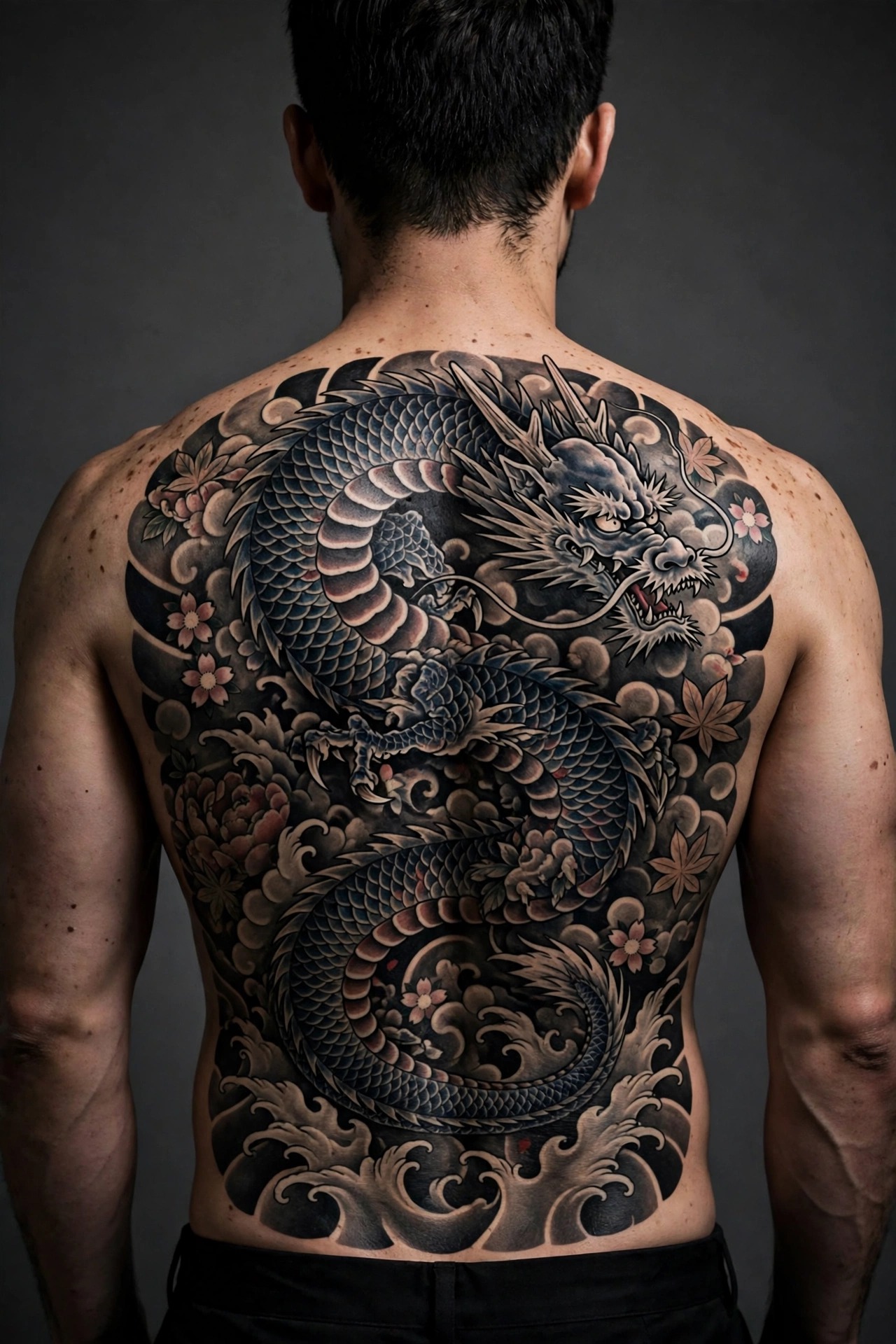
1. Full back Japanese scene: dragon winding from shoulder to hip.
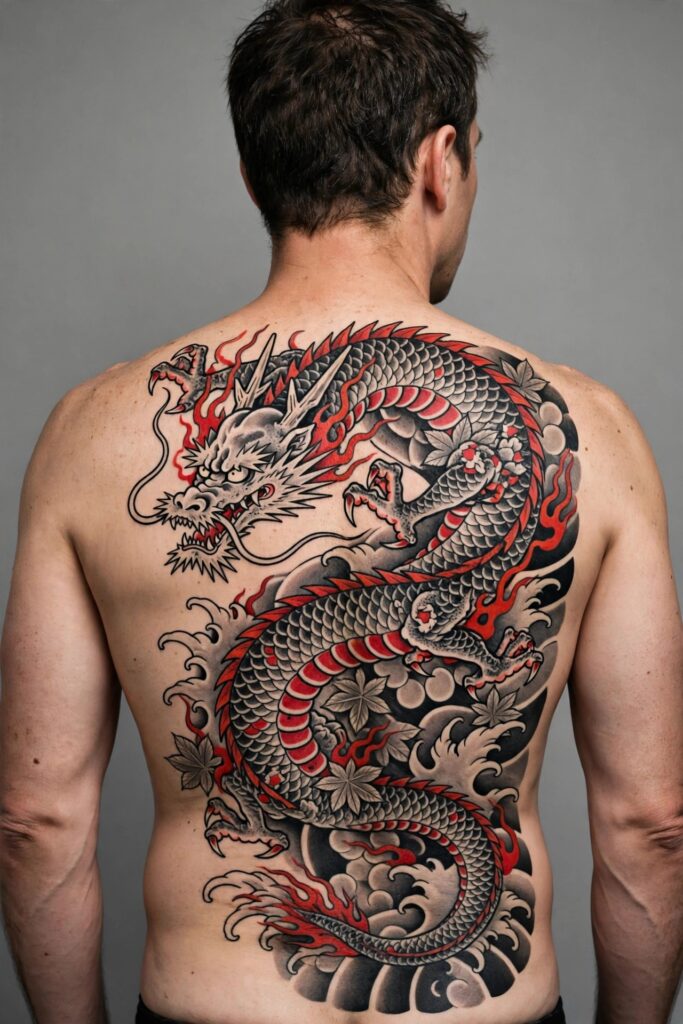
Meaning: In Japanese tattooing, the dragon stands for wisdom, strength and protection; winding it across the whole back gives the creature room to move, which is the point of the style.
Design details: The dragon’s body flowing from one shoulder to the opposite hip, with clouds, wind bars and sometimes water or cherry blossoms filling the background.
Best placement: The entire back, edge to edge — this is a bodysuit-panel piece, not a spot tattoo.
Size: Full back, shoulder to hip.
Recommended size: Full back, worked over multiple sessions; the background is as important as the dragon itself.
Best for wearers who want the definitive large back piece and the commitment it takes.
2. Angel wings spanning both shoulder blades.
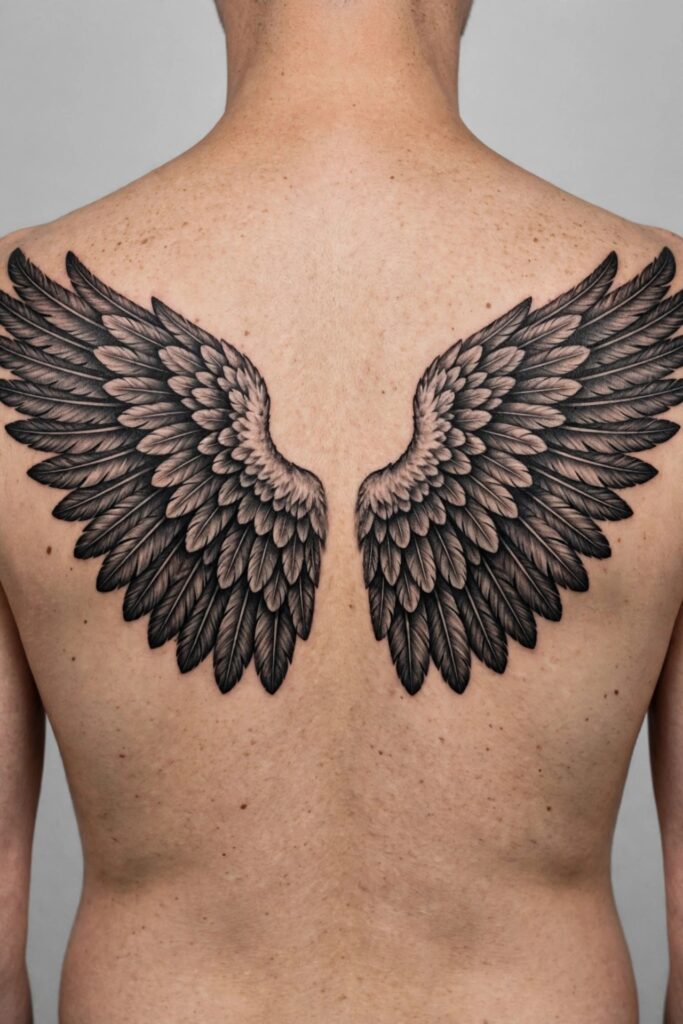
Meaning: Wings stand for protection, freedom and remembrance — often worn for someone lost or watched over.
Design details: Symmetrical feathered wings spreading from the spine across both shoulder blades, usually in black and grey realism.
Best placement: Centred on the upper back, the wings following the shoulder blades’ natural spread.
Size: 10–15 inches across.
Recommended size: 10–14 inches across; small wings lose the feather detail that makes this design work.
Best for wearers who want a powerful symmetrical memorial or protection piece.
3. Large blackwork skull with roses, centred on the upper back.
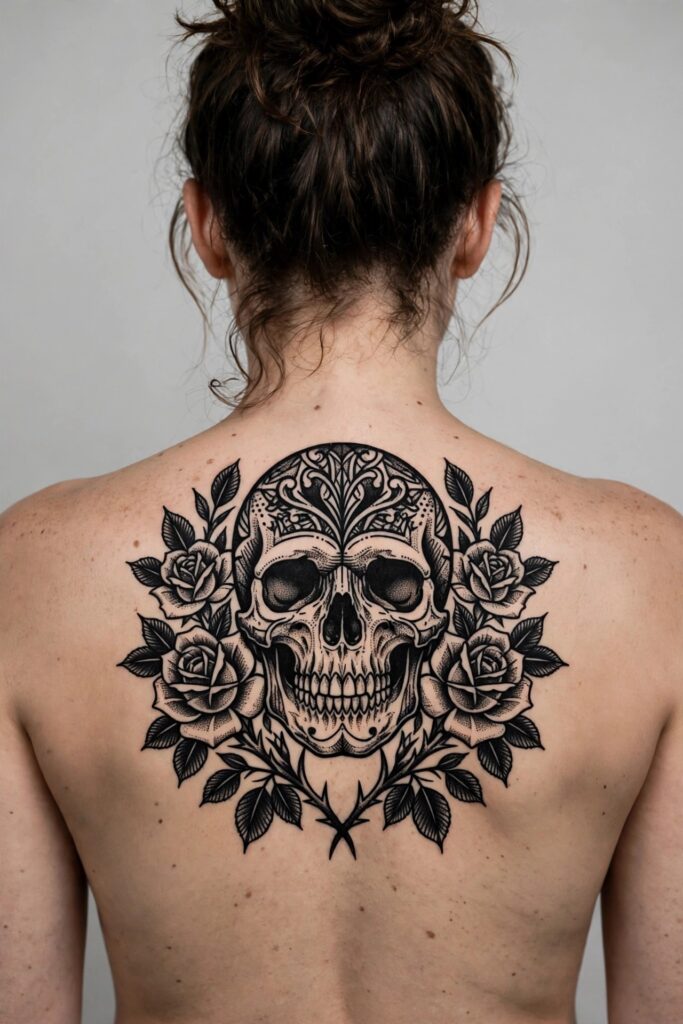
Meaning: The skull-and-rose pairing stands for the balance of life and death — beauty and mortality in one image.
Design details: Bold black skull with detailed roses tucked around it, high contrast, centred composition.
Best placement: Centred on the upper back between the shoulder blades, where it reads as one emblem.
Size: 8–13 inches tall.
Recommended size: 8–12 inches tall; the skull needs size for its detail to hold.
Best for wearers who want dark imagery with classic balance.
4. Full back religious scene or large cross with clouds.
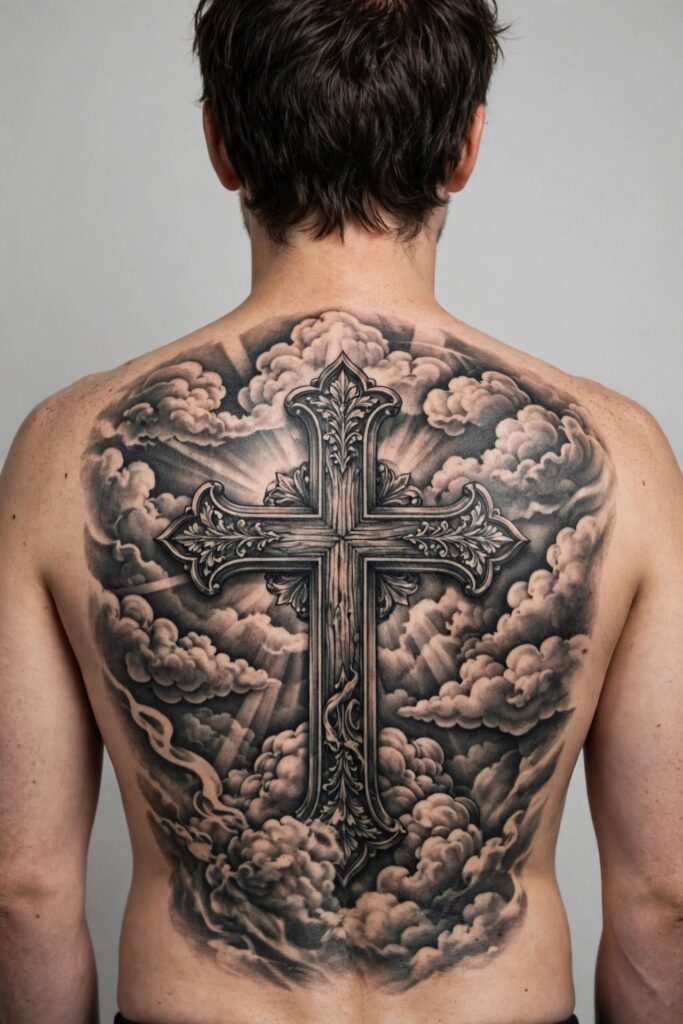
Meaning: A declaration of faith at the largest scale — the back as a canvas for devotion.
Design details: Large cross with clouds, light rays and sometimes praying hands or scripture banners, usually in black and grey.
Best placement: Full back or centred upper-to-mid back, kept symmetrical.
Size: Full back, 10 inches or more.
Recommended size: Large — 10 inches or more; religious scenes need scale for their drama.
Best for wearers whose faith is central to their identity.
5. Geometric mandala covering the whole upper back.
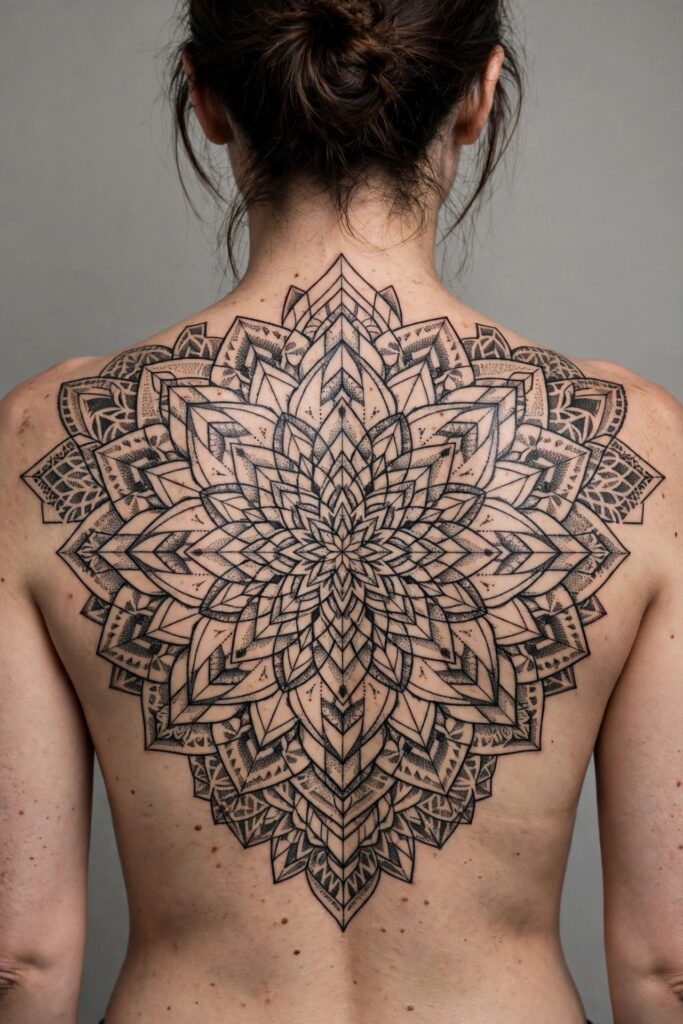
Meaning: The mandala stands for balance, harmony and the universe in ordered form.
Design details: Symmetrical dotwork and linework radiating from a centre point, precise geometry throughout.
Best placement: Centred on the upper back, using the shoulder blades as the frame.
Size: 8–13 inches across.
Recommended size: 8–12 inches across; geometry needs room for precision.
Best for wearers who want symmetry and precision as the whole statement.
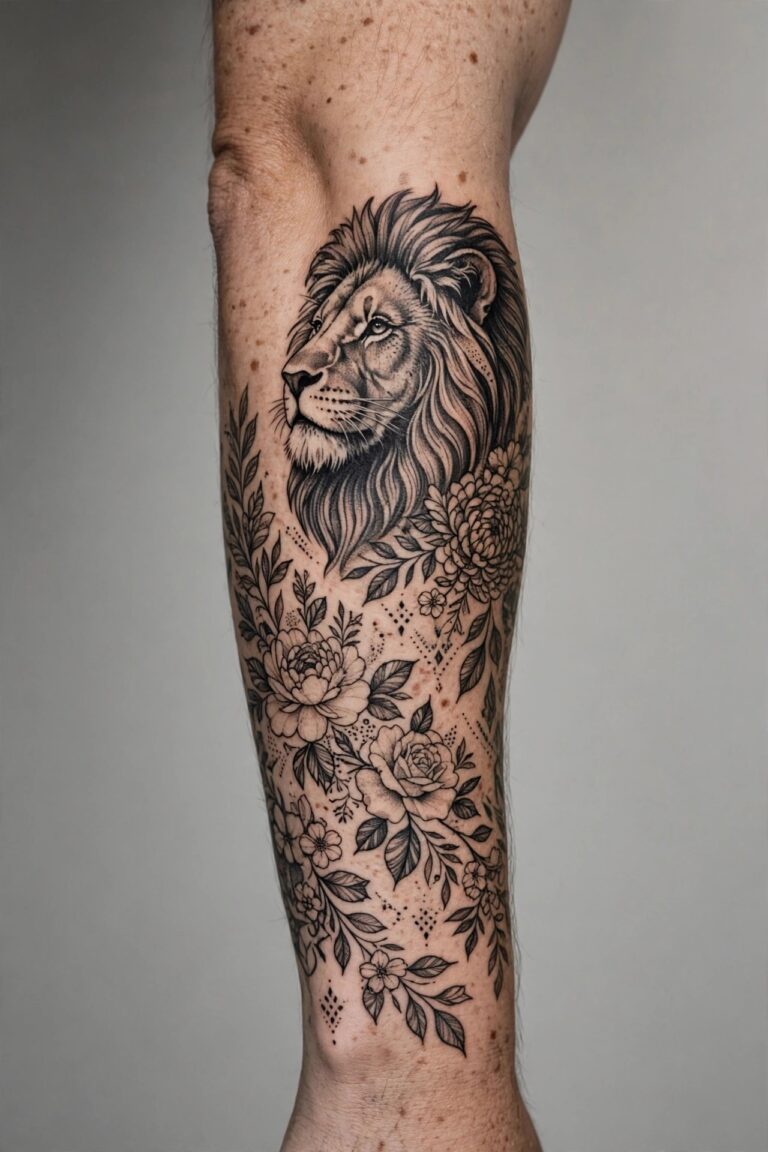
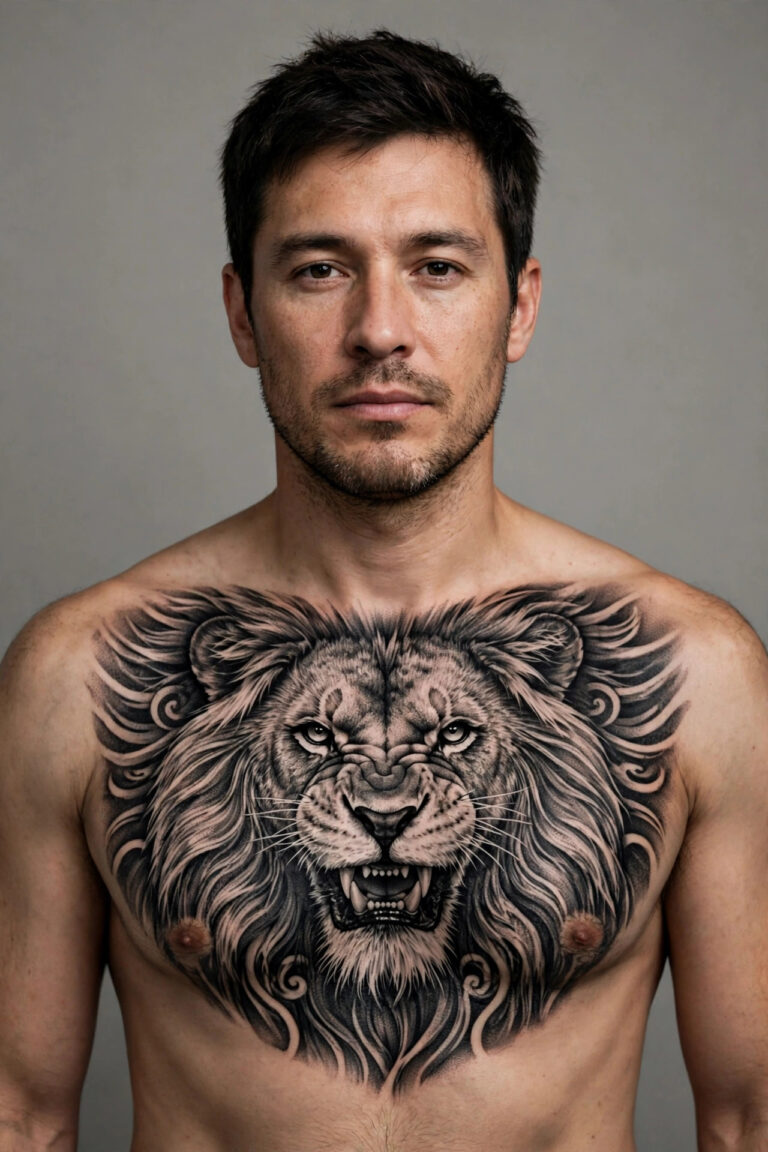
6. Large realistic lion head, centred between the shoulder blades.
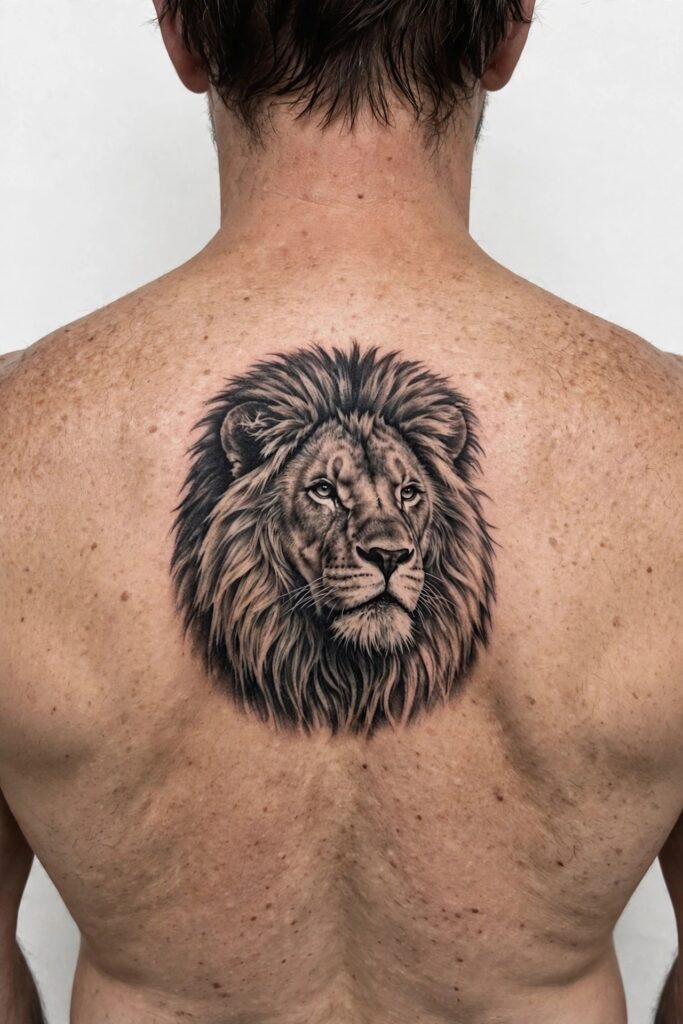
Meaning: The lion stands for courage, leadership and pride — the king of beasts watching your back, literally.
Design details: Realistic lion face in black and grey, mane flowing outward, intense eyes.
Best placement: Centred between the shoulder blades, facing outward.
Size: 8–11 inches.
Recommended size: 8–10 inches; realism needs scale to hold its detail.
Best for wearers who want strength and authority in one image.
Upper Back and Shoulder Blades
7. Bold eagle with spread wings across the upper back.
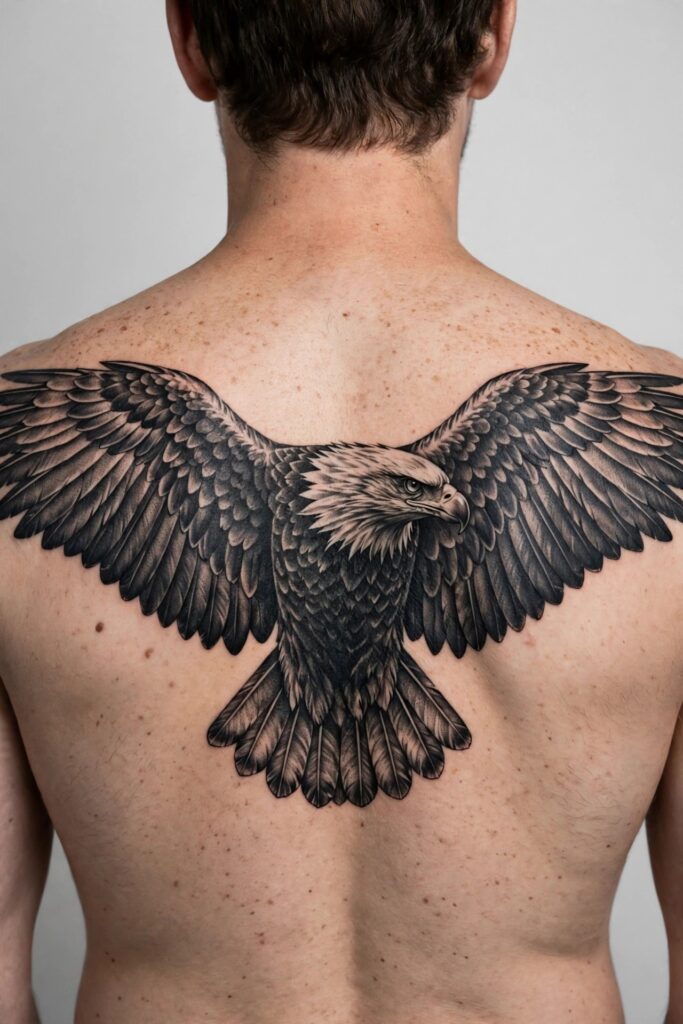
Meaning: The eagle stands for freedom, vision and power — wings spread is the defiant version.
Design details: Eagle with wings fully spread, feathers detailed, often with the head turned fiercely to the side.
Best placement: Upper back, the wings following the shoulders’ width.
Size: 10–15 inches across the wings.
Recommended size: 10–14 inches across the wings.
Best for wearers who want a power symbol at full span.
8. Viking compass (Vegvisir) on the upper back, between the shoulders.
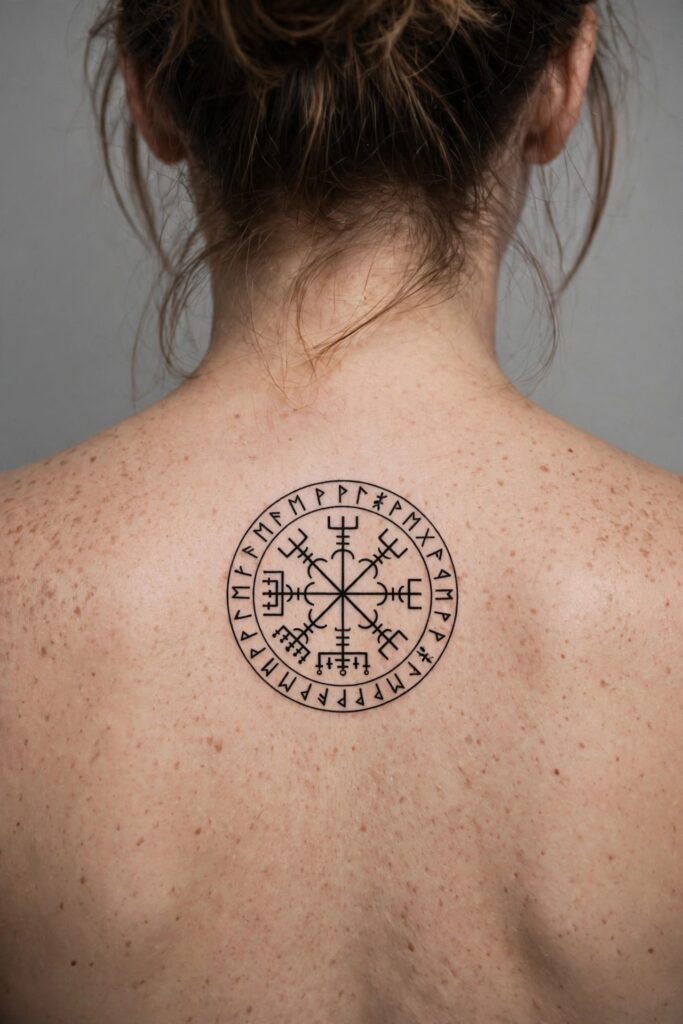
Meaning: The Vegvisir is said to guide the wearer through rough weather — direction and protection on a journey.
Design details: The eight-armed compass stave with a runic ring, black linework, sometimes with knotwork.
Best placement: Upper back between the shoulders, centred.
Size: 5–8 inches.
Recommended size: 5–7 inches; the stave arms need room to stay distinct.
Best for wearers drawn to Norse symbolism and guidance.
9. Blackwork wolf head on one shoulder blade.
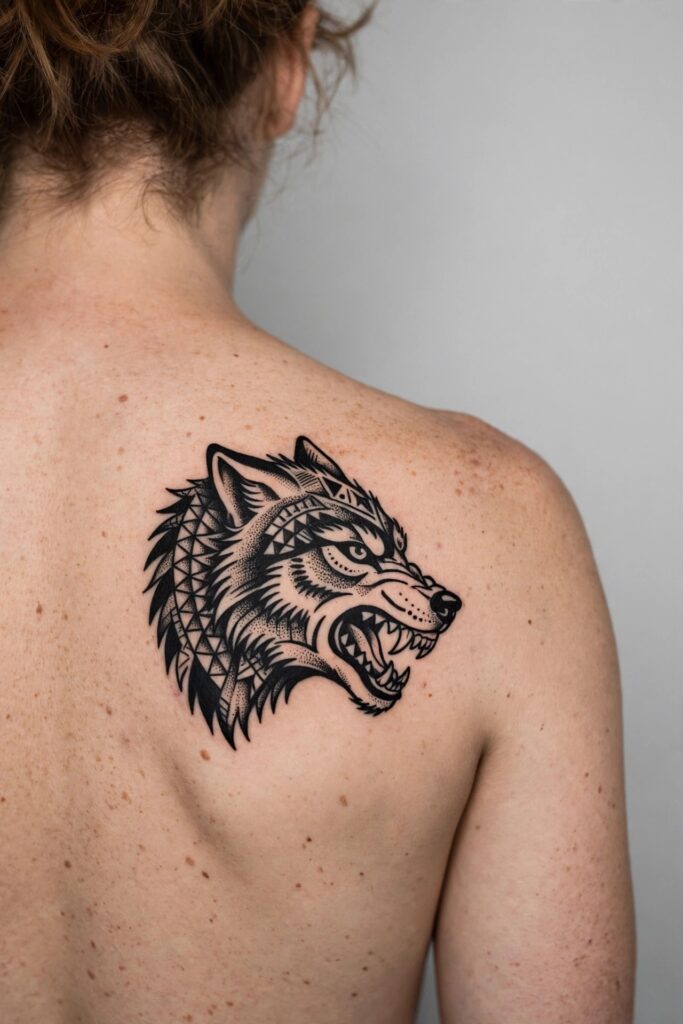
Meaning: The wolf stands for loyalty, instinct and wildness — a pack animal worn solo.
Design details: Bold black wolf head in profile or front-facing, heavy blacks with sharp highlights.
Best placement: On one shoulder blade, using its shape as the frame.
Size: 5–8 inches.
Recommended size: 5–7 inches.
Best for wearers who want a fierce, compact statement.
10. Traditional dagger and snake on the upper back.
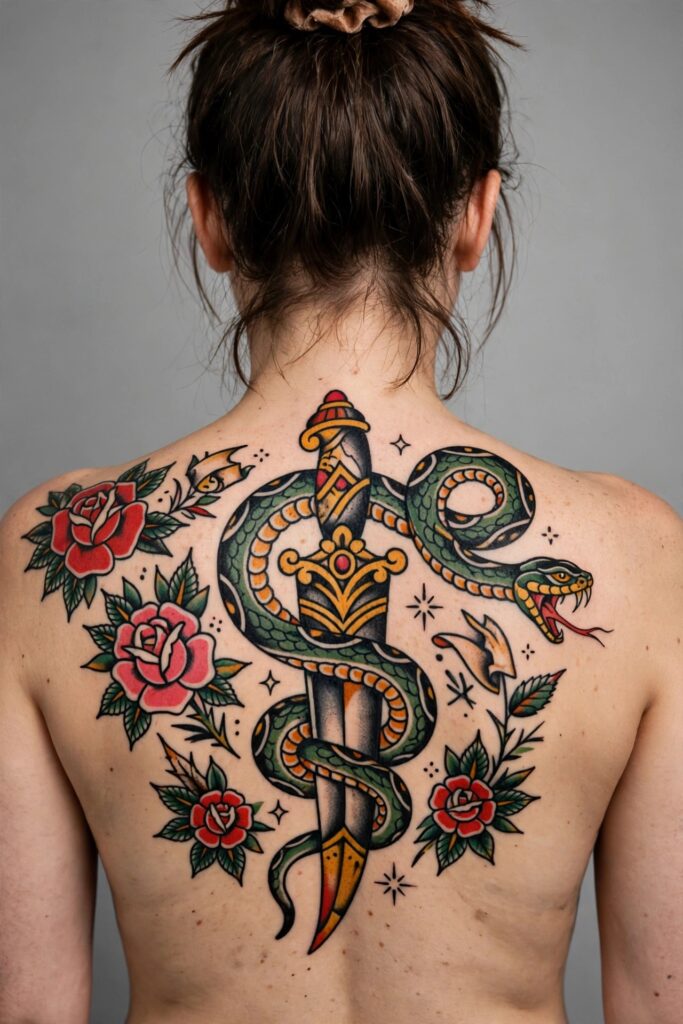
Meaning: The dagger and snake is a classic pairing — betrayal and danger, or cutting through deception.
Design details: Bold traditional dagger piercing or wrapped by a snake, old-school colour or black and grey.
Best placement: Upper back, in a vertical composition.
Size: 6–9 inches tall.
Recommended size: 6–8 inches tall.
Best for wearers who love classic tattoo iconography.
11. Script quote running horizontally across the upper back.
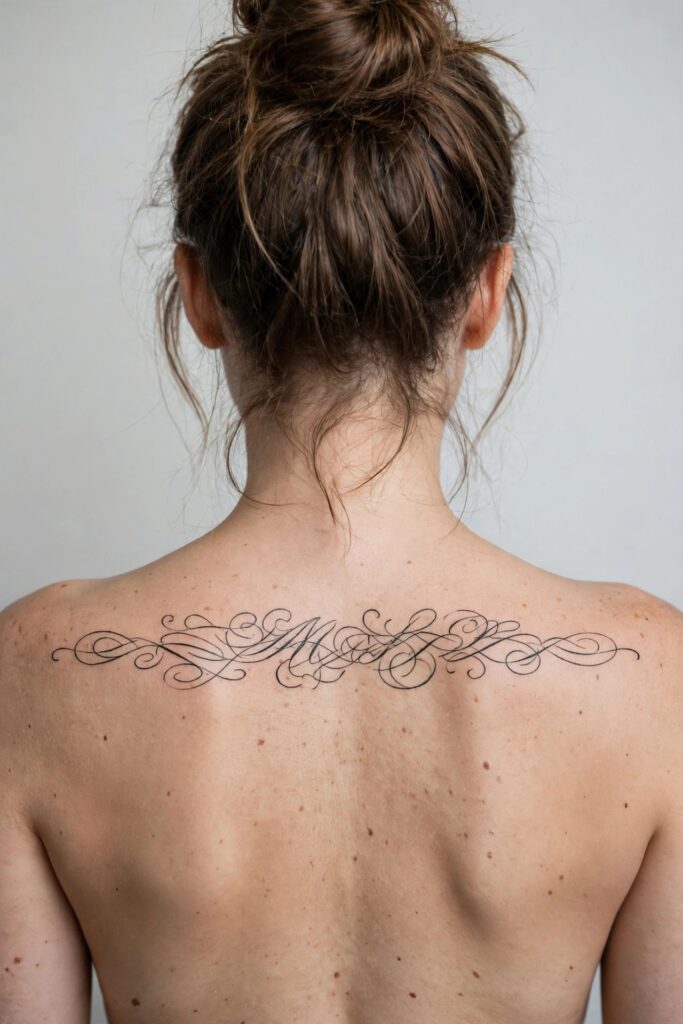
Meaning: Words worn where the world reads them — a motto, lyric or dedication at billboard scale.
Design details: Clean lettering in script or bold serif, one or two lines, even spacing.
Best placement: Horizontally across the upper back, below the shoulder line.
Size: Letters 1–2 inches tall.
Recommended size: Letters at least 1 inch tall; back pieces are seen from a distance.
Best for wearers who want their words impossible to miss.
Small and Subtle Back Pieces
12. Small cross at the nape of the neck, top of the back.
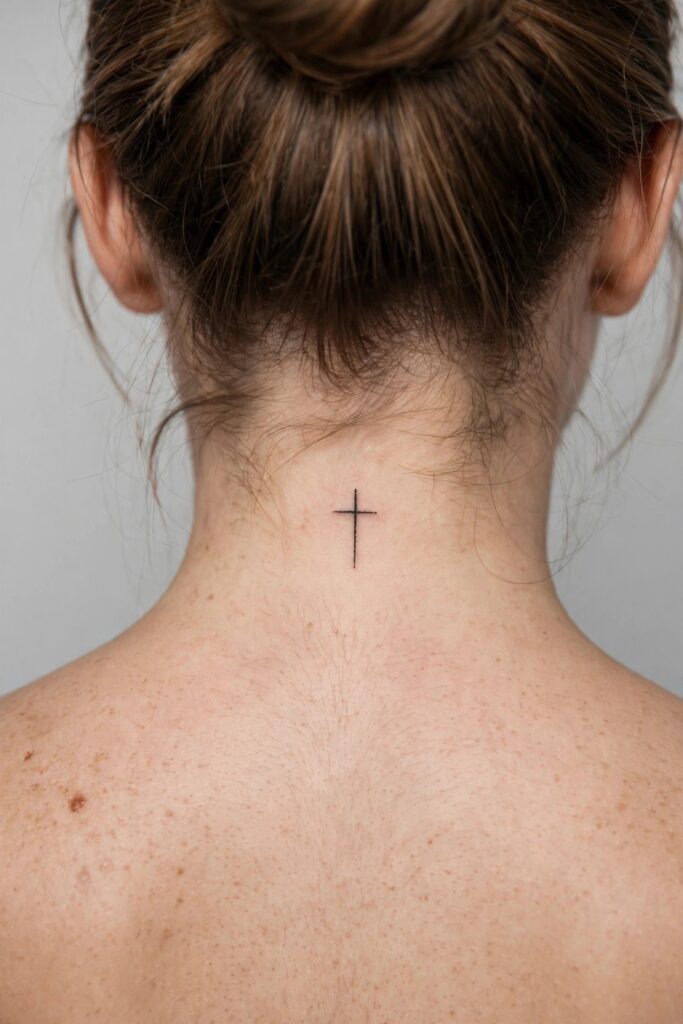
Meaning: Faith kept close and personal — the nape is a private, tender spot.
Design details: Simple small cross, thin or bold lines, minimal and clean.
Best placement: Nape of the neck, at the top of the back.
Size: 1–3 inches.
Recommended size: 1–2 inches.
Best for wearers who want a quiet mark of faith.
13. Minimal mountain range along the spine.
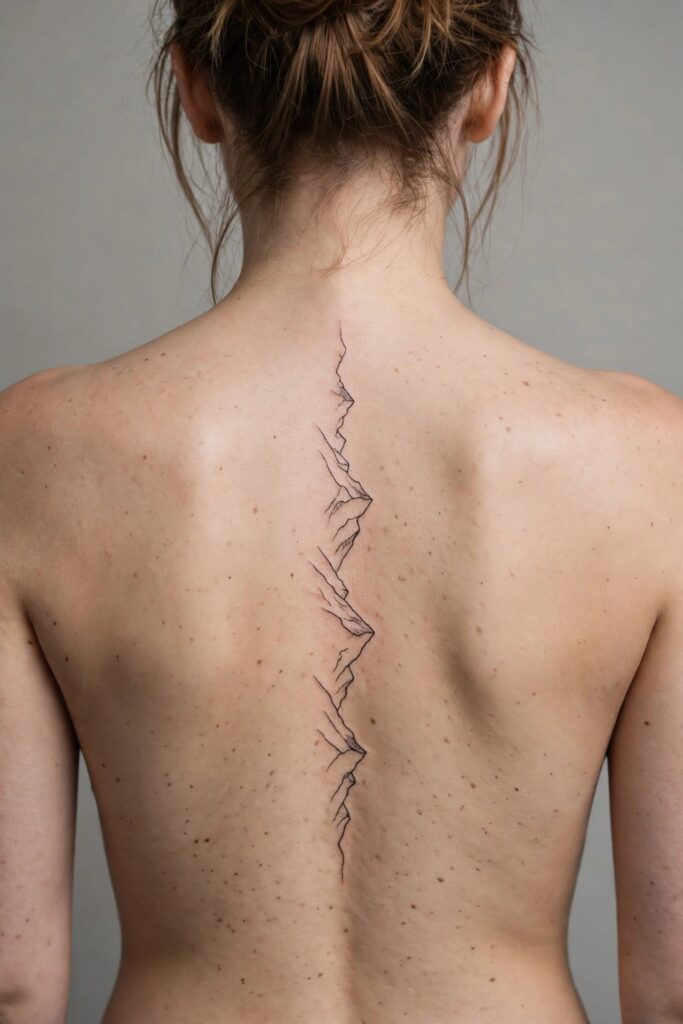
Meaning: Mountains for strength and journey, placed on the body’s own ridgeline.
Design details: Simple ridgeline following the spine’s vertical line.
Best placement: Along the spine, vertical.
Size: 4–7 inches long.
Recommended size: 4–6 inches long.
Best for wearers who want a subtle spine piece with meaning.
14. Small compass rose between the shoulder blades.
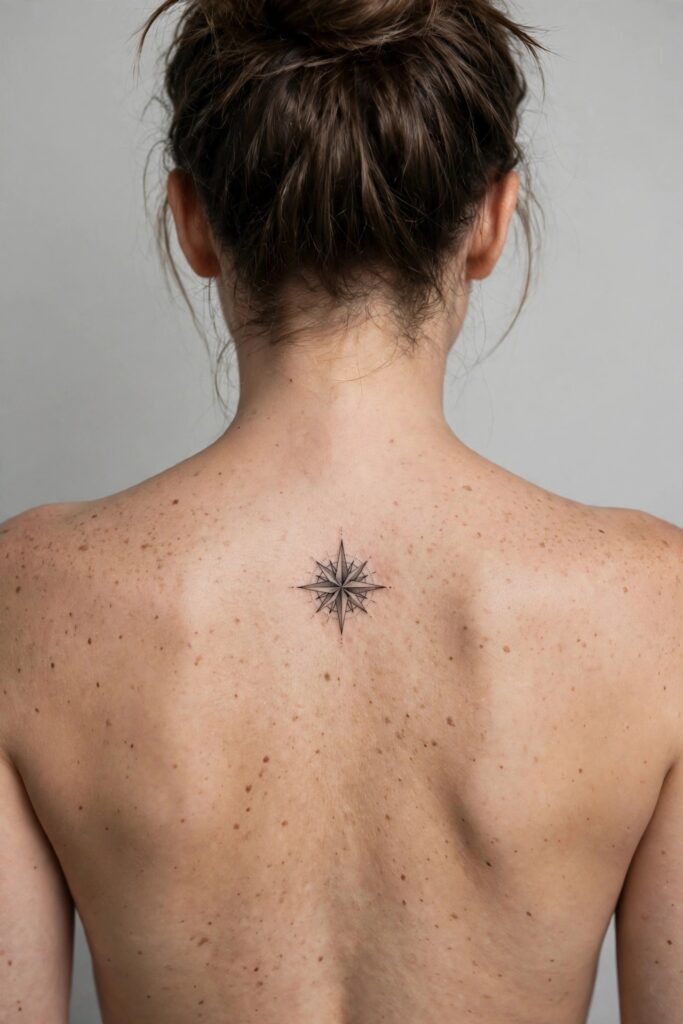
Meaning: Direction, travel and finding one’s way — the traveller’s emblem.
Design details: Classic compass star with N/E/S/W points, black and grey or simple linework.
Best placement: Centred between the shoulder blades.
Size: 3–5 inches.
Recommended size: 3–4 inches.
Best for wearers who navigate by their own star.
15. Tiny fine line bird in flight on the upper back.
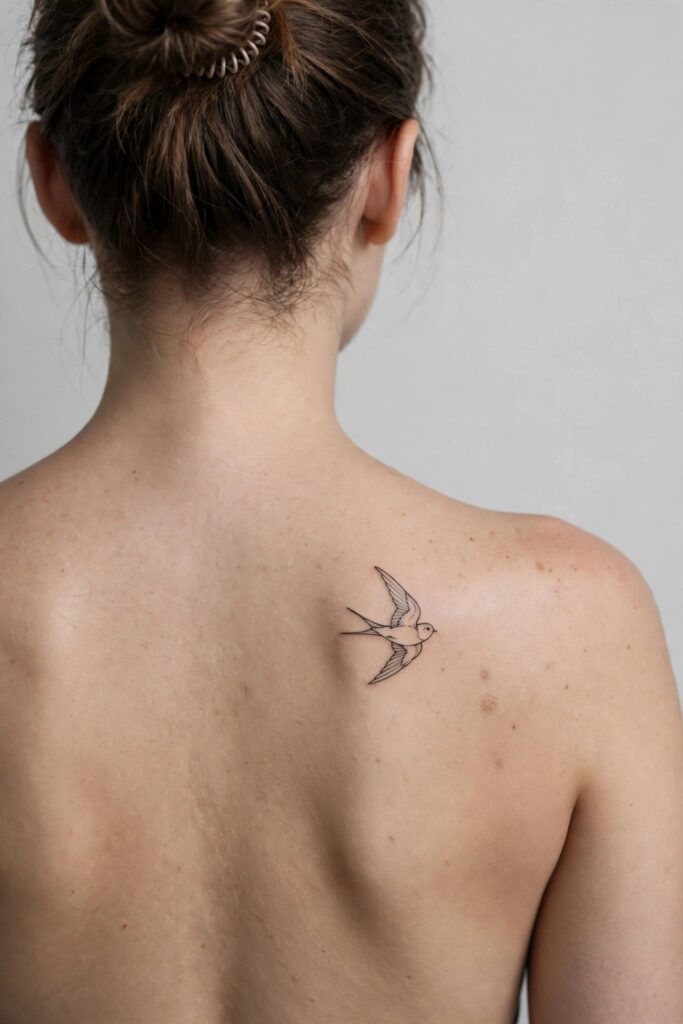
Meaning: Freedom and lightness in miniature.
Design details: Small bird reduced to a few fine strokes, wings in motion.
Best placement: Upper back, off-centre, so it feels like it is passing through.
Size: 2–4 inches.
Recommended size: 2–3 inches.
Best for wearers who want the smallest possible back tattoo with real meaning.
16. Small Roman numerals down the spine.
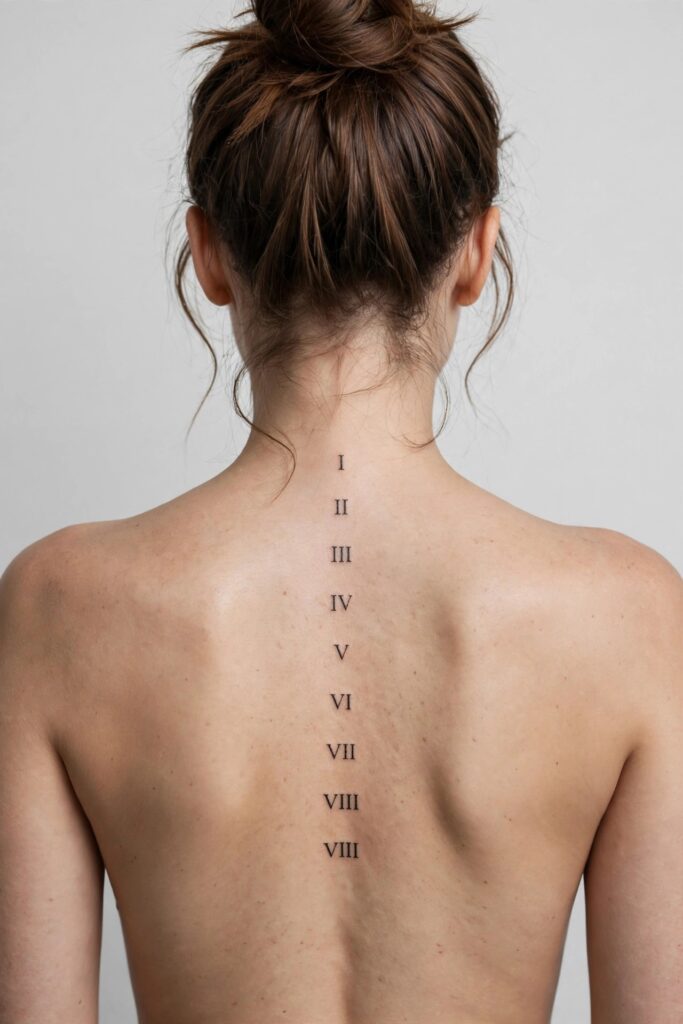
Meaning: A date that matters — birth, loss, survival — written in the timeless numeral style.
Design details: Clean Roman numerals stacked vertically, even spacing.
Best placement: Down the spine, vertical.
Size: Numerals 0.5–1.5 inches tall each.
Recommended size: Numerals 0.5–1 inch tall each.
Best for wearers who carry a date with them always.
Lower Back and Spine
17. Vertical spine script running down the centre of the back.
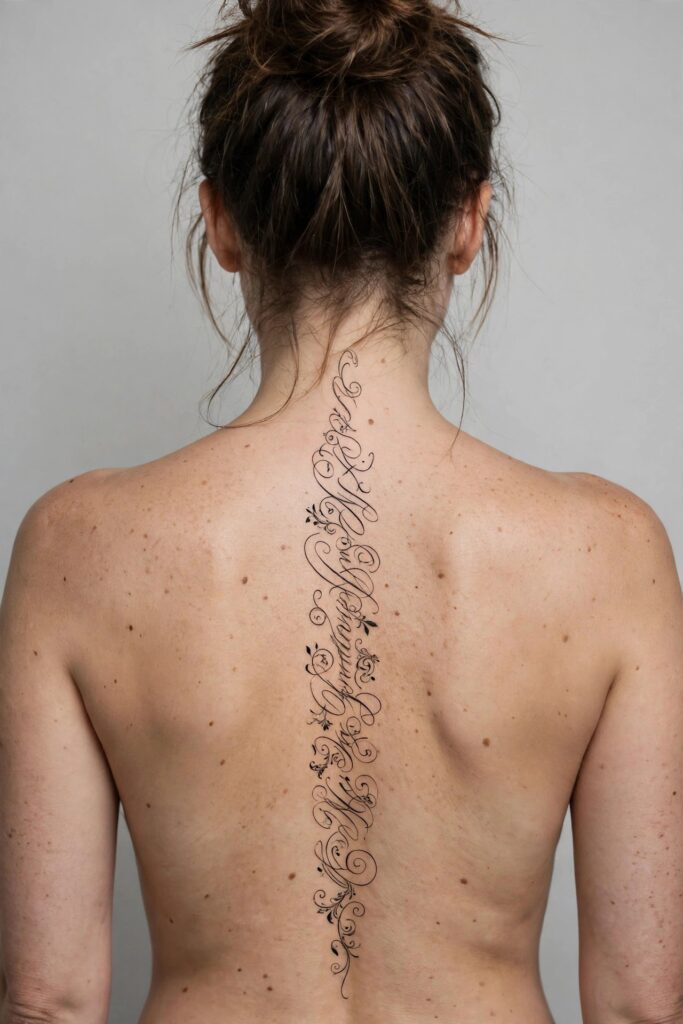
Meaning: A phrase or name following the body’s central line — intimate and structural.
Design details: Script lettering running vertically, sized to the back’s length.
Best placement: Down the centre of the back along the spine.
Size: Letters 1–2 inches tall.
Recommended size: Letters sized to be read from a few feet away.
Best for wearers who want text as architecture.
18. Tribal-inspired pattern across the lower back, kept bold and simple.
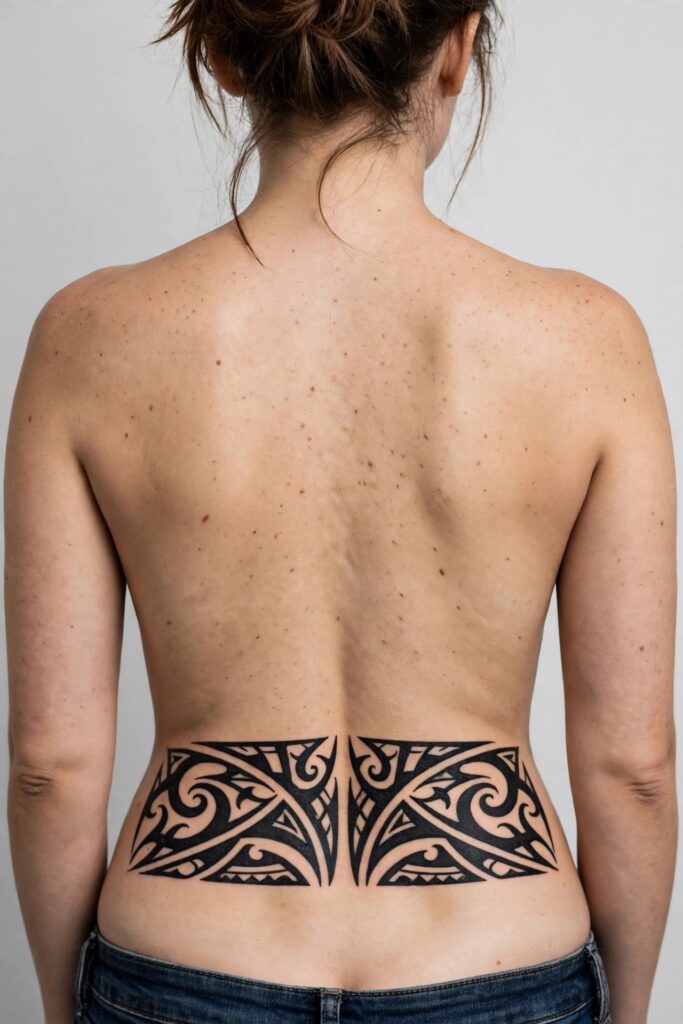
Meaning: Tribal patterns carry heritage and boldness; kept simple they age well.
Design details: Bold black symmetrical pattern, clean lines, no fine detail.
Best placement: Across the lower back, symmetrical.
Size: 6–11 inches wide.
Recommended size: 6–10 inches wide; bold tribal needs scale.
Best for wearers who want bold blackwork with roots.
More Back Designs
19. Phoenix rising across the upper back.
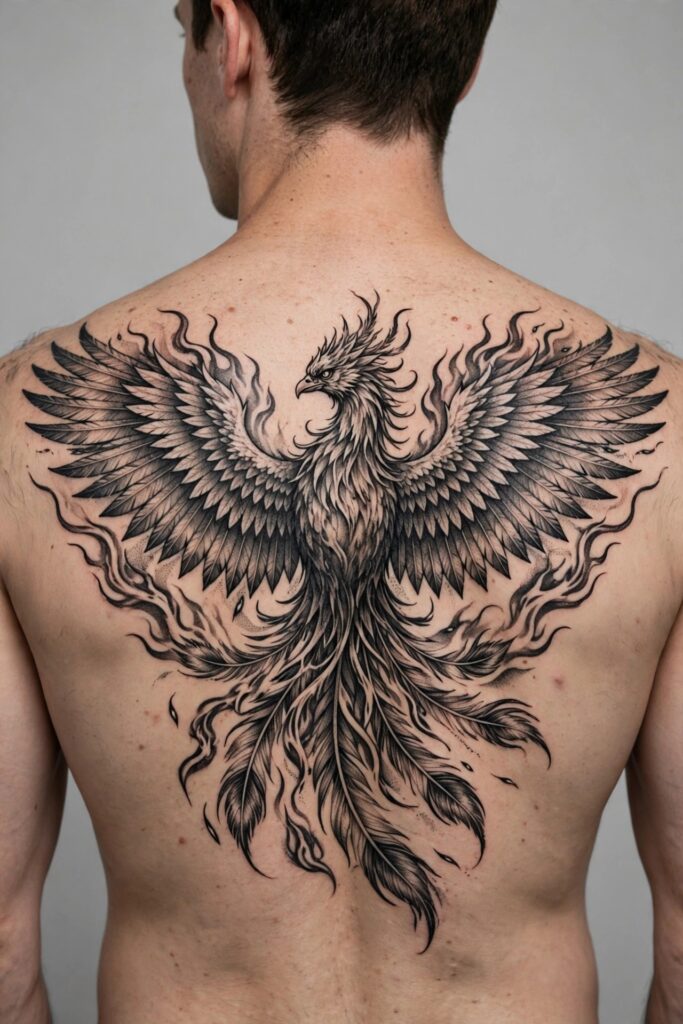
Meaning: Rebirth — rising from the ashes, worn where the world sees it.
Design details: Phoenix with wings spread across the upper back, flames and feathers in black and grey or colour.
Best placement: Upper back, wings following the shoulder blades.
Size: 8–13 inches across.
Recommended size: 8–12 inches across.
Best for wearers who rose from something hard.
20. Single rose on one shoulder blade.
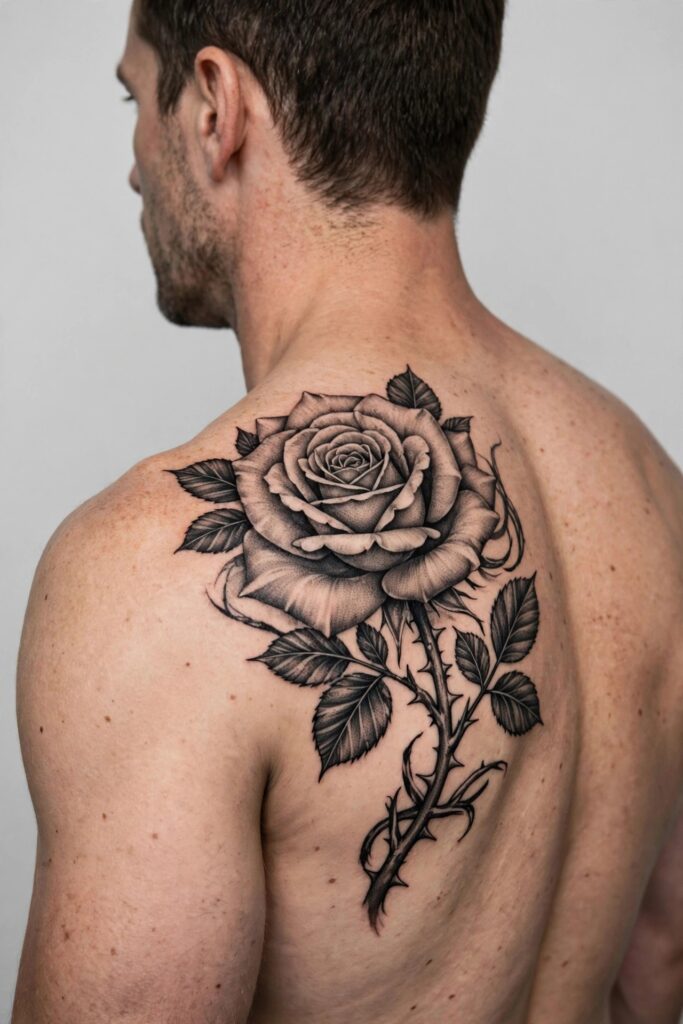
Meaning: Love and balance — the classic flower, worn bold.
Design details: Large single rose in black and grey realism, thorns and leaves framing it.
Best placement: On one shoulder blade.
Size: 5–8 inches.
Recommended size: 5–7 inches.
Best for wearers who want one flower, done large.
21. Owl with spread wings on the upper back.
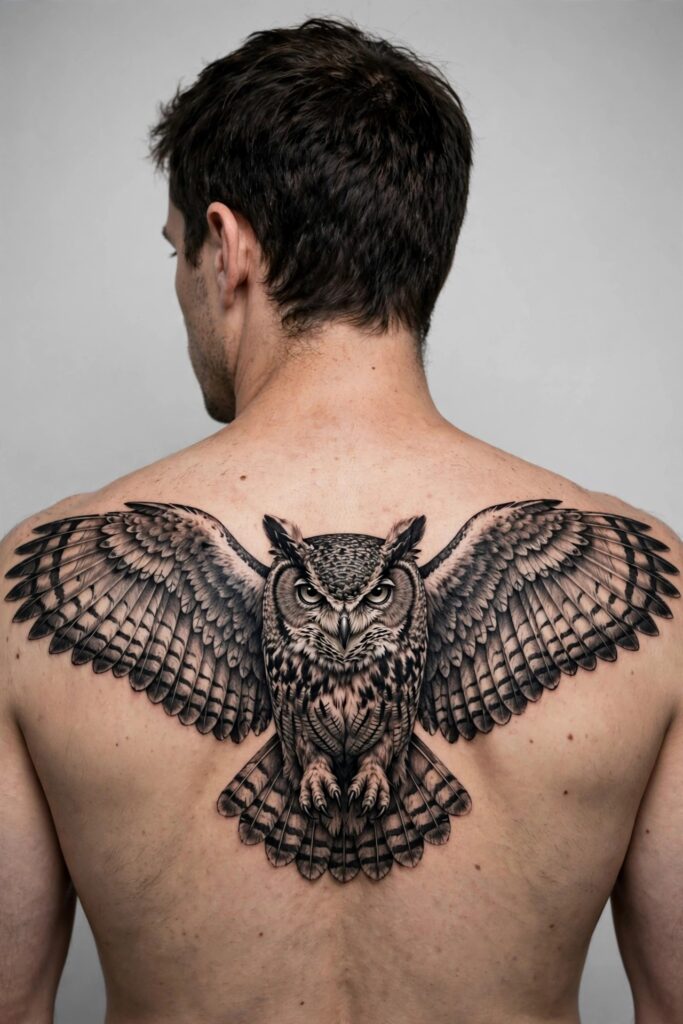
Meaning: Wisdom and watchfulness — the night hunter, guarding the back.
Design details: Owl with wings spread, detailed feathers, intense eyes, usually black and grey.
Best placement: Upper back, centred between the shoulder blades.
Size: 5–8 inches across.
Recommended size: 5–7 inches across.
Best for wearers who watch and wait.
22. Clock and gears on one shoulder blade.
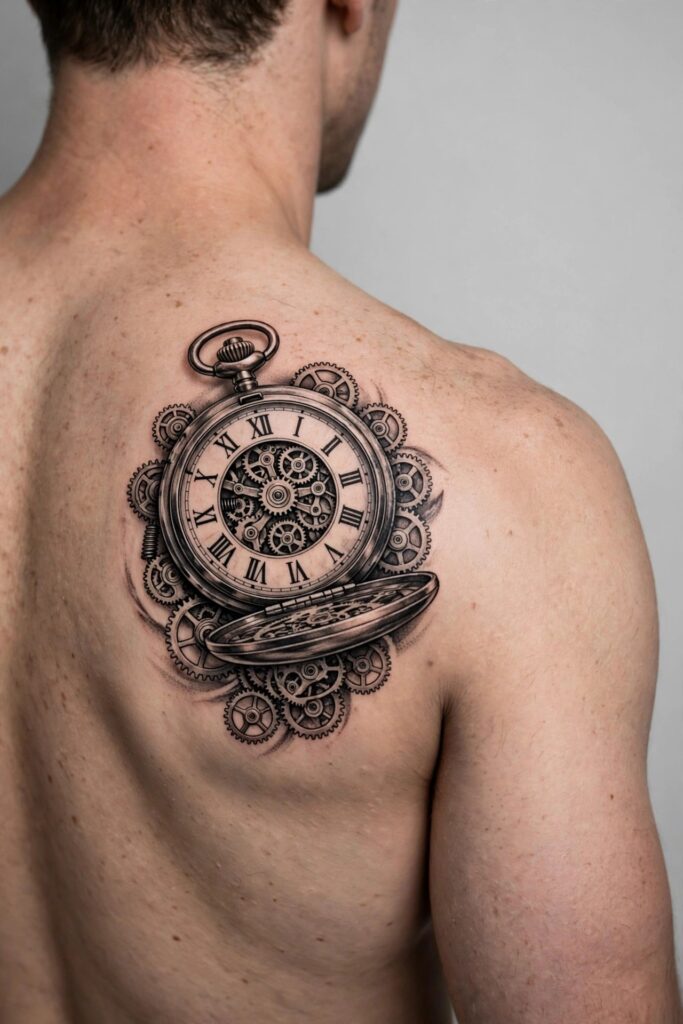
Meaning: Time — the hours we keep and the ones we lost.
Design details: Pocket watch or clock face with gears and Roman numerals, black and grey realism.
Best placement: On one shoulder blade.
Size: 5–8 inches.
Recommended size: 5–7 inches.
Best for wearers who keep time close.
23. Anchor across the upper back.
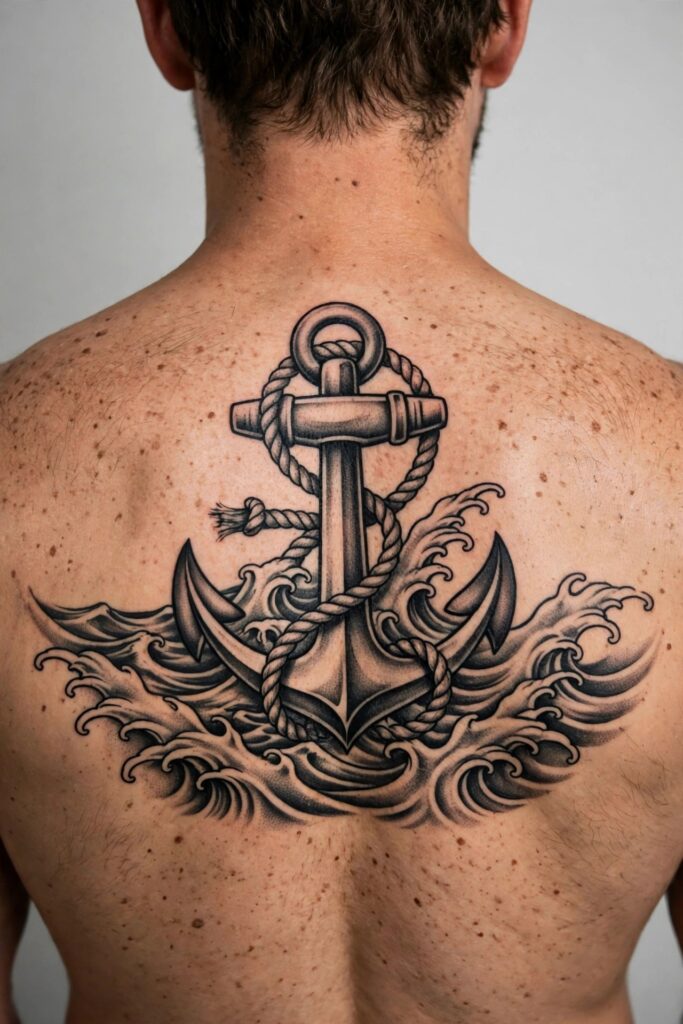
Meaning: Stability — holding fast through rough weather.
Design details: Bold traditional anchor with rope and waves, old-school or black and grey.
Best placement: Upper back, centred.
Size: 5–8 inches.
Recommended size: 5–7 inches.
Best for wearers who hold steady.
24. Feather running down the spine.
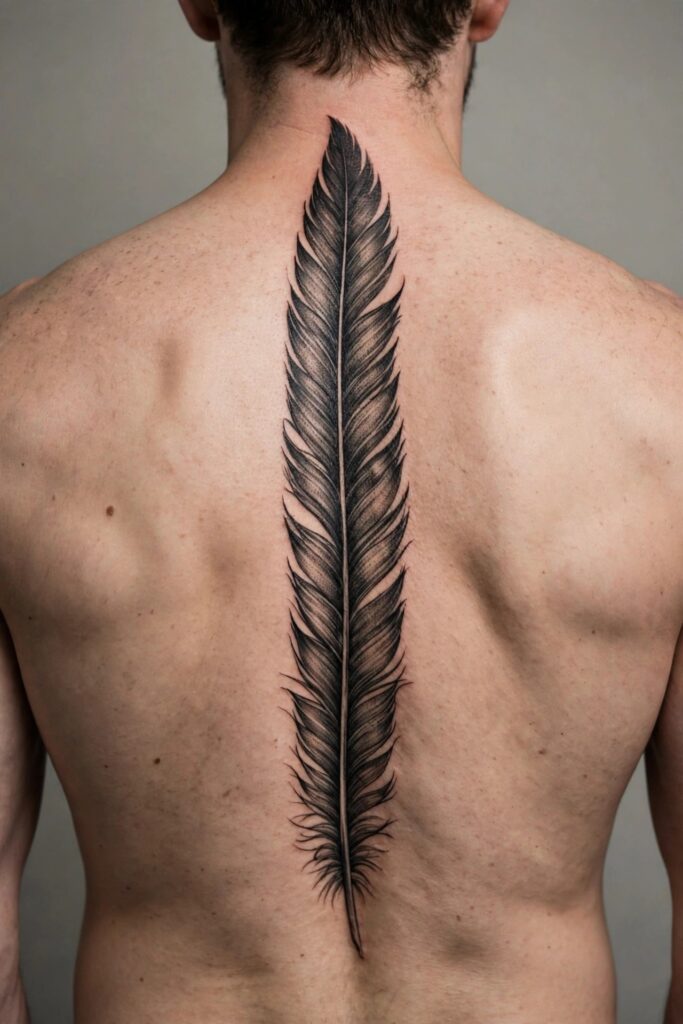
Meaning: Lightness and freedom — a single feather following the body’s line.
Design details: Detailed feather with fine barbs, running vertically down the spine.
Best placement: Down the spine, vertical.
Size: 4–7 inches long.
Recommended size: 4–6 inches long.
Best for wearers who travel light.
25. Tree with spreading branches across the lower back.
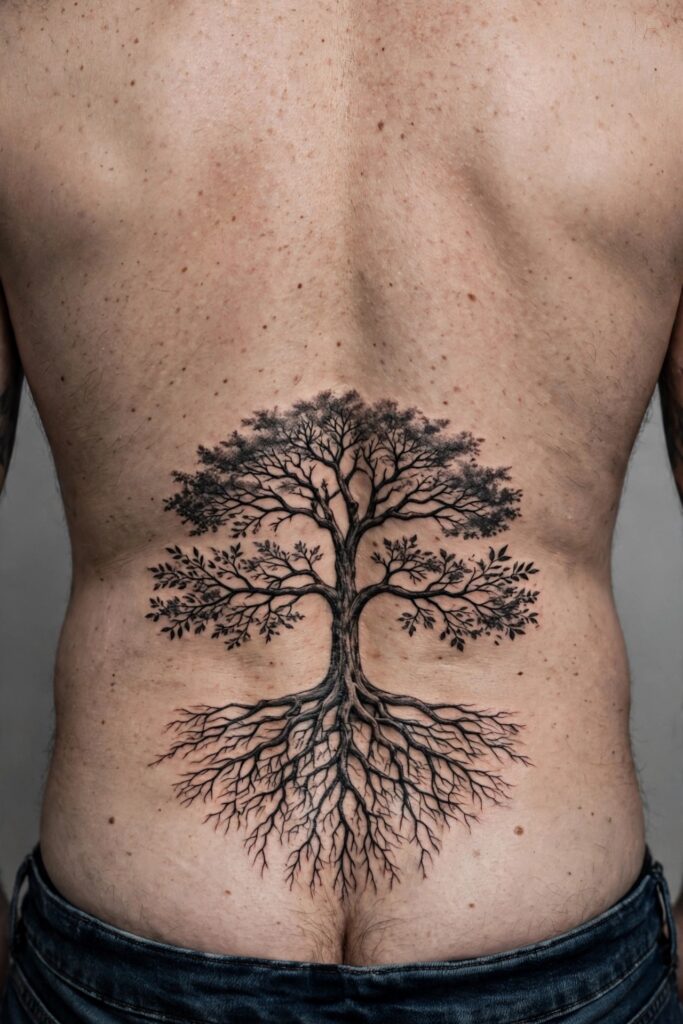
Meaning: Roots and growth — grounded, still reaching.
Design details: Tree with roots and spreading branches, symmetrical, black and grey.
Best placement: Across the lower back, symmetrical.
Size: 6–11 inches wide.
Recommended size: 6–10 inches wide.
Best for wearers rooted and still growing.
How Much Do Back Tattoos Hurt?
Back tattoos are among the more comfortable large tattoos, but the spot matters. The upper back and outer shoulder blades, with good muscle coverage, are usually rated moderate — a dull, steady ache rather than sharp pain. The spine itself, the shoulder blade edges and the lower back near the hip bones hurt more, because bone sits close to the skin there. The main challenge of a back tattoo is not intensity but endurance: a large piece means long sessions, lying face down for hours, and the ache building over time. Short breaks help, and most artists will plan a large back piece across several sessions rather than one marathon sitting.
Cost and Sessions for a Back Tattoo
Small upper-back tattoos are priced like any small piece, often at or near a shop minimum. A large back piece is a different commitment: a full back design typically takes several sessions spread over weeks or months, and the total cost reflects that time. That spread is actually an advantage — it lets the skin heal between sessions, lets you judge the design as it grows, and spreads the cost. Before committing, ask the artist for a realistic session estimate and total price range, not just an hourly rate, and be wary of anyone promising a full back piece in a single sitting.
The Fading and Aftercare Truth About Back Tattoos
Back tattoos hold up well, because the back gets less sun and friction than hands or forearms — but aftercare is harder, because you cannot reach it. You will need help applying moisturiser to the centre of the back for the first couple of weeks, and you must avoid tight clothing rubbing the fresh tattoo, sleeping on your back while it heals, and soaking it in baths or pools. Loose shirts, clean bedding and a willing helper are the unglamorous essentials. Once healed, sunscreen still matters for any back tattoo that sees sun, especially the upper back and shoulders.
Choosing a Design That Fits the Back
The back rewards designs that use its shape: symmetry works beautifully across the shoulder blades, vertical designs follow the spine, and large scenes need the full width to breathe. A design borrowed from a forearm will usually look lost on a back, and a design shrunk from a full back piece will look cramped on a shoulder blade. Show the artist the area you actually want covered, and let them scale the design to it rather than fixing a size in advance.
Frequently Asked Questions
Are back tattoos painful?
Moderate, on average. The upper back is one of the more comfortable spots; the spine, blade edges and lower back hurt more. Long sessions are the harder part, not sharp pain.
How long does a full back tattoo take?
Usually several sessions over weeks or months, depending on size and detail. A small upper-back piece may take a single short session.
Can I hide a back tattoo for work?
Easily, with a normal shirt — which is one of the back’s main advantages over hands, neck and forearms. Only the nape and upper shoulders show in some clothing.
How do I look after a back tattoo I cannot reach?
Ask someone to help with moisturiser for the first two weeks, wear loose clothing, sleep on your side or stomach while it heals, and keep bedding clean.
Final Thoughts
A back tattoo for men works best when it is sized to the back itself: a large piece given the sessions it needs, or a small piece placed deliberately on the upper back or spine rather than floating in the middle of nowhere. Pick a design above, get a realistic session and cost estimate before you start, and line up help for aftercare — the tattoo will look better for it.